

What is the maximum temperature a homogenizer can withstand?
Jan 15, 2026
As a seasoned supplier of homogenizers, I often encounter inquiries from customers about the maximum temperature these machines can withstand. This is a crucial aspect, especially when considering the diverse applications of homogenizers across various industries. In this blog post, I'll delve into the factors that determine the maximum temperature tolerance of homogenizers, the implications of high - temperature operation, and how our products are designed to handle these challenges.
Factors Affecting the Maximum Temperature Tolerance
The maximum temperature a homogenizer can withstand is influenced by several key factors. First and foremost is the material of construction. Homogenizers are typically made from a variety of materials, including stainless steel, ceramic, and polymers. Each material has its own thermal properties.
Stainless steel is a popular choice due to its durability and corrosion resistance. It can generally withstand relatively high temperatures. Most industrial - grade stainless steel used in homogenizers can tolerate temperatures up to around 400 - 500°C. This makes it suitable for applications where moderate to high - temperature processing is required. For example, in the food industry, when homogenizing products that need to be pasteurized at elevated temperatures, a stainless - steel homogenizer can perform well.
Ceramic materials, on the other hand, are known for their excellent heat resistance. Some advanced ceramic homogenizer components can withstand temperatures in excess of 1000°C. However, ceramics are brittle and more expensive, so they are often used in specialized applications where extremely high temperatures are involved, such as in certain chemical or high - energy material processing.

Polymers are used in some homogenizer parts, especially for seals and gaskets. The temperature tolerance of polymers varies widely. Common polymers like polyethylene can only withstand temperatures up to around 80 - 100°C, while high - performance polymers such as PEEK (polyether ether ketone) can handle temperatures up to 260°C. The choice of polymer for seals is critical because if the temperature exceeds its limit, the seal can fail, leading to leaks and potential damage to the homogenizer.
Another factor is the design of the homogenizer. The internal structure, such as the flow path and the presence of cooling mechanisms, can significantly affect temperature tolerance. Homogenizers with efficient cooling systems can dissipate heat more effectively, allowing them to operate at higher temperatures without overheating. For instance, some homogenizers are equipped with water - cooled jackets that surround the high - pressure chamber. This helps to maintain a stable temperature within the machine, even when processing materials at elevated temperatures.
Implications of High - Temperature Operation
Operating a homogenizer at high temperatures can have both positive and negative implications. On the positive side, high - temperature homogenization can enhance the efficiency of certain processes. In the pharmaceutical industry, for example, high - temperature homogenization can improve the solubility of drugs and the stability of emulsions. It can also help to reduce the viscosity of materials, making them easier to process.
However, there are also several negative consequences. High temperatures can cause thermal degradation of the materials being processed. This is particularly a concern in the food and beverage industry, where heat - sensitive ingredients can lose their nutritional value or develop off - flavors. In addition, high - temperature operation can accelerate wear and tear on the homogenizer components. The increased thermal stress can cause expansion and contraction of materials, leading to mechanical failures over time. Seals and gaskets are especially vulnerable to high - temperature damage, as mentioned earlier.
Our Homogenizer Solutions
At our company, we understand the importance of temperature tolerance in homogenizers. We offer a range of products designed to meet different temperature requirements.
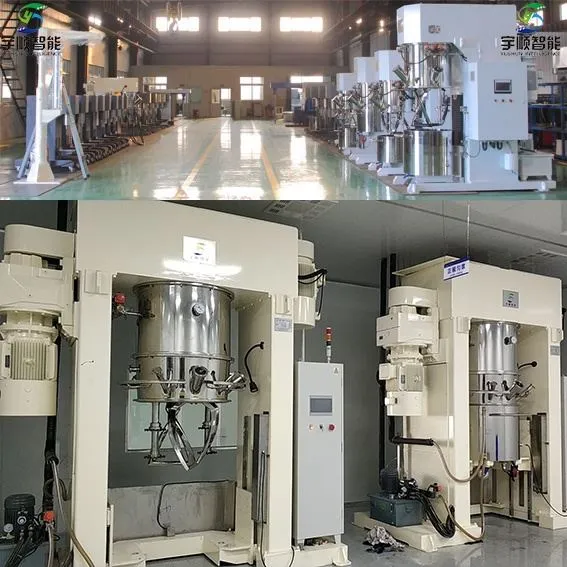
Our High Speed Vacuum Mixer Homogenizer is a versatile machine suitable for a variety of applications. It is constructed with high - quality stainless steel, which provides good temperature resistance. The design includes an efficient cooling system that allows it to operate at moderate temperatures for extended periods. This makes it ideal for industries such as food, cosmetics, and chemical processing.
For more specialized applications, we have the Lithium Battery Dispersing Homogenizer. In the lithium - battery industry, the homogenization process often involves high - energy materials and can generate significant heat. Our lithium - battery dispersing homogenizer is designed to handle these conditions. It uses advanced materials and a robust cooling mechanism to ensure stable operation at relatively high temperatures.
Testing and Quality Assurance
To ensure that our homogenizers can withstand the claimed maximum temperatures, we conduct rigorous testing. Our testing procedures include simulating real - world operating conditions in our state - of - the - art laboratories. We use temperature sensors and data loggers to monitor the temperature inside the homogenizer during operation. This allows us to accurately measure the temperature distribution and ensure that all components are within their safe operating limits.
In addition, we perform long - term durability tests at elevated temperatures. By running the homogenizers continuously at high temperatures for extended periods, we can identify any potential issues such as material degradation or mechanical failures. This helps us to improve our product design and ensure that our customers receive reliable and high - performance homogenizers.
Choosing the Right Homogenizer Based on Temperature Requirements
When selecting a homogenizer, it is essential to consider the temperature requirements of your specific application. If you are working with heat - sensitive materials, you may need a homogenizer with a lower maximum temperature tolerance but with excellent temperature control capabilities. On the other hand, if your process involves high - energy materials or requires high - temperature processing, you should choose a homogenizer made from heat - resistant materials and equipped with an efficient cooling system.
Our team of experts is always available to assist you in choosing the right homogenizer for your needs. We can provide detailed technical information and recommendations based on your specific requirements. Whether you are in the food, pharmaceutical, chemical, or battery industry, we have the expertise to help you find the perfect homogenizer solution.
Conclusion
The maximum temperature a homogenizer can withstand is determined by a combination of factors, including the material of construction, design, and the presence of cooling mechanisms. Understanding these factors is crucial for selecting the right homogenizer for your application. At our company, we offer a wide range of homogenizers designed to meet different temperature requirements. Our High Speed Vacuum Mixer Homogenizer and Lithium Battery Dispersing Homogenizer are just two examples of our high - quality products.
If you are in the market for a homogenizer and have questions about temperature tolerance or any other technical aspects, we encourage you to contact us. Our team is ready to engage in in - depth discussions with you to understand your specific needs and provide tailored solutions. Whether you are a small - scale producer or a large - scale industrial operation, we can help you find the homogenizer that meets your requirements and ensures the success of your production process.
References
- Perry, R. H., & Green, D. W. (1997). Perry's Chemical Engineers' Handbook. McGraw - Hill.
- McCarthy, M. J. (2007). Food Engineering and Dairy Technology. Wiley - Blackwell.
- Doraiswamy, L. K., & Sharma, M. M. (1984). Heterogeneous Reactions: Analysis, Examples, and Reactor Design. Wiley.